Blog
XXV INCOSAI: Library
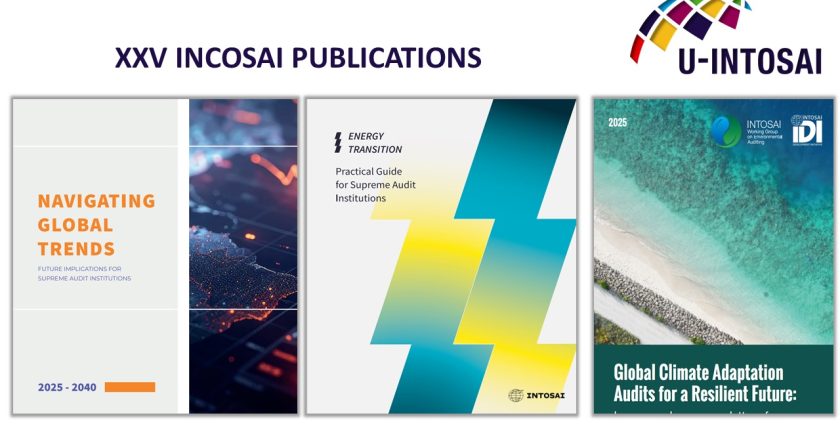
Multiple key media releases reflecting the current public audit development trends and international community priorities were presented at the Congress.
Global Trends Report
by SAI Brazil
As the chair of the INTOSAI Working Group on SDGs and Key Sustainable Development Indicators and the Working Group on Public Procurement Audit, SAI Russia also took part in the project. SAI Russia pointed out the following trends: increased interest to macroeconomic forecast and ESG practice feasibility audit, digitalization of public procurement audit. The research revealed seven key trends: diminishing trust in public institutions; economic issues and increase in public debt; digital transformation of public administration and social life; climate change; demographic issues; global migration; increasing economic inequality.
Energy Transition Practical Guide for SAIs
The Guide was presented by SAI Brazil jointly with SAI Uganda, chair of the Working Group on Audit of Extractive Industries.
The document presents a comprehensive auditing methodology consisting of six sequential stages (defining the audit subject matter, information collection and systematization, key risks identification, audit, results presentation and follow-up). Each stage is supported by practical tools: a risk matrix, a process map, a list of assessment parameters that make it possible to analyze the development stage the public energy policy is currently at. The guide proposes to focus on four areas of analysis: governance, fair and inclusive energy transition, financing, thematic areas.
Joint Audit of Climate Change Response Measures for a Sustainable Future: Lessons and Recommendations for SAIs
The project is led by the INTOSAI Development Initiative (IDI) and chaired by SAI Finland (SAI Thailand starting 2025).
The document accumulates control and expert analysis results from 54 SAIs broken down by four thematic areas: climate change adaptation, aquatic resources management, incident prevention and containment, rising sea level and shoreline erosion. The key issues it highlights is the fragmented governance and lack of interdepartmental communication, insufficient financing, weak civic society involvement, lack of reliable monitoring systems. The authors emphasize the importance of independent auditors’ assessment for improving climatic adaptation planning, financing and implementation processes.