Blog
SAI Belarus held an international seminar on audit digitalization
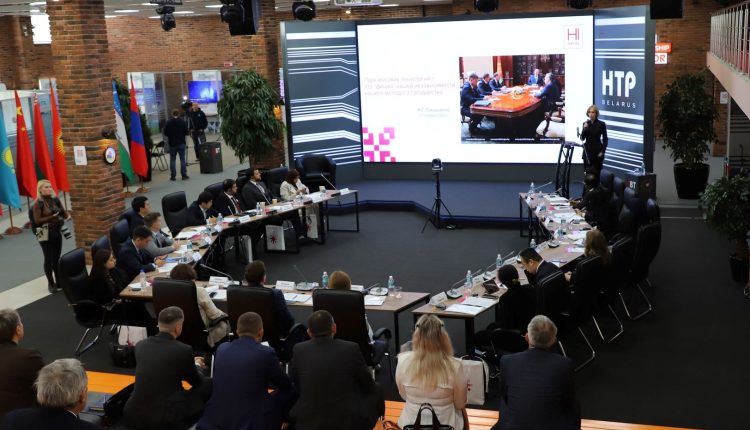
On 28–29 May 2026, an international seminar of Supreme Audit Institutions of the member states of the Shanghai Cooperation Organisation was held in Minsk, Republic of Belarus. The seminar focused on the digital development of public audit and was organized by the State Control Committee of the Republic of Belarus.
The event was attended by representatives of the Supreme Audit Institutions of Belarus, China, India, Iran, Kazakhstan, Pakistan, Russia and Tajikistan, as well as the United Arab Emirates as an SCO dialogue partner state.
The central theme of agenda was the use of Big Data and artificial intelligence technologies to move from traditional control methods towards more precise and risk-oriented audit. Participants presented a wide range of digital solutions, including national data analysis platforms, digital profiles of audited entities, satellite image processing technologies, unmanned systems and intelligent tools for detecting violations.
Vasily Gerasimov, Chairman of the SAI of Belarus, noted the importance of introducing modern technologies into public audit practice. He emphasized that the digital environment makes it possible to improve the quality of control, reduce the inspection burden and prevent violations at an early stage.
Representatives of SAI India spoke about the development of their own large language model and the use of artificial intelligence to analyze infrastructure projects and tax transactions. SAI China presented its experience in creating a large-scale digital audit infrastructure and applying intelligent data analysis to identify financial violations and risks in public procurement. The SAIs of Iran and Kazakhstan demonstrated solutions for real-time monitoring of public finances. The delegation of SAI Russia presented a project to create a unified digital platform that will ensure the integration of information systems and centralized work with data.
Following the discussion, participants noted that digitalization contributes to improving the efficiency of public audit. At the same time, it was emphasized that modern technologies should strengthen auditors’ analytical capabilities rather than replace their professional judgement.